
ᴡ𝚑𝚢 ɪ'𝚖 ʀ𝚊𝚒𝚜𝚒𝚗𝚐 ᴍ𝚢 ᴄ𝚑𝚒𝚕𝚍𝚛𝚎𝚗 𝚝𝚘 ʟ𝚎𝚊𝚟𝚎...
w𝚑𝚢 𝚝𝚑𝚎 𝚋𝚊𝚛𝚐𝚊𝚒𝚗 𝚋𝚎𝚝𝚠𝚎𝚎𝚗 𝚝𝚑𝚎 b𝚛𝚒𝚝𝚒𝚜𝚑 𝚜𝚝𝚊𝚝𝚎 𝚊𝚗𝚍 𝚒𝚝𝚜 𝚙𝚎𝚘𝚙𝚕𝚎 𝚒𝚜 𝚎𝚡𝚙𝚒𝚛𝚒𝚗𝚐, 𝚊𝚗𝚍 𝚠𝚑𝚊𝚝 𝚝𝚑𝚎 𝚙𝚛𝚒𝚌𝚎 𝚒𝚜 𝚝𝚎𝚕𝚕𝚒𝚗𝚐 𝚢𝚘𝚞 𝚝𝚘 𝚍𝚘.

preface.
i don’t say this often.
read tonight’s paper.
i’ve been building toward this argument across three essays. the spice and the ledger set the foundation. the evolutionary paradox named britain’s disease. tonight’s paper prices it.
the sovereign parasite. it’s about what happens when the subsidy that built the state quietly withdraws and the government’s response is to polish the windows and call it a growth strategy. it’s about why the gilt market deserves your attention. it’s about my kids, in britain, being handed a map that no longer connects to anything that pays.
it’s roughly five thousand words and a trade note. it’ll take you twenty minutes.
i think those twenty minutes will change how you see the next five years.
subscribe if you aren’t already. tonight. before it drops.
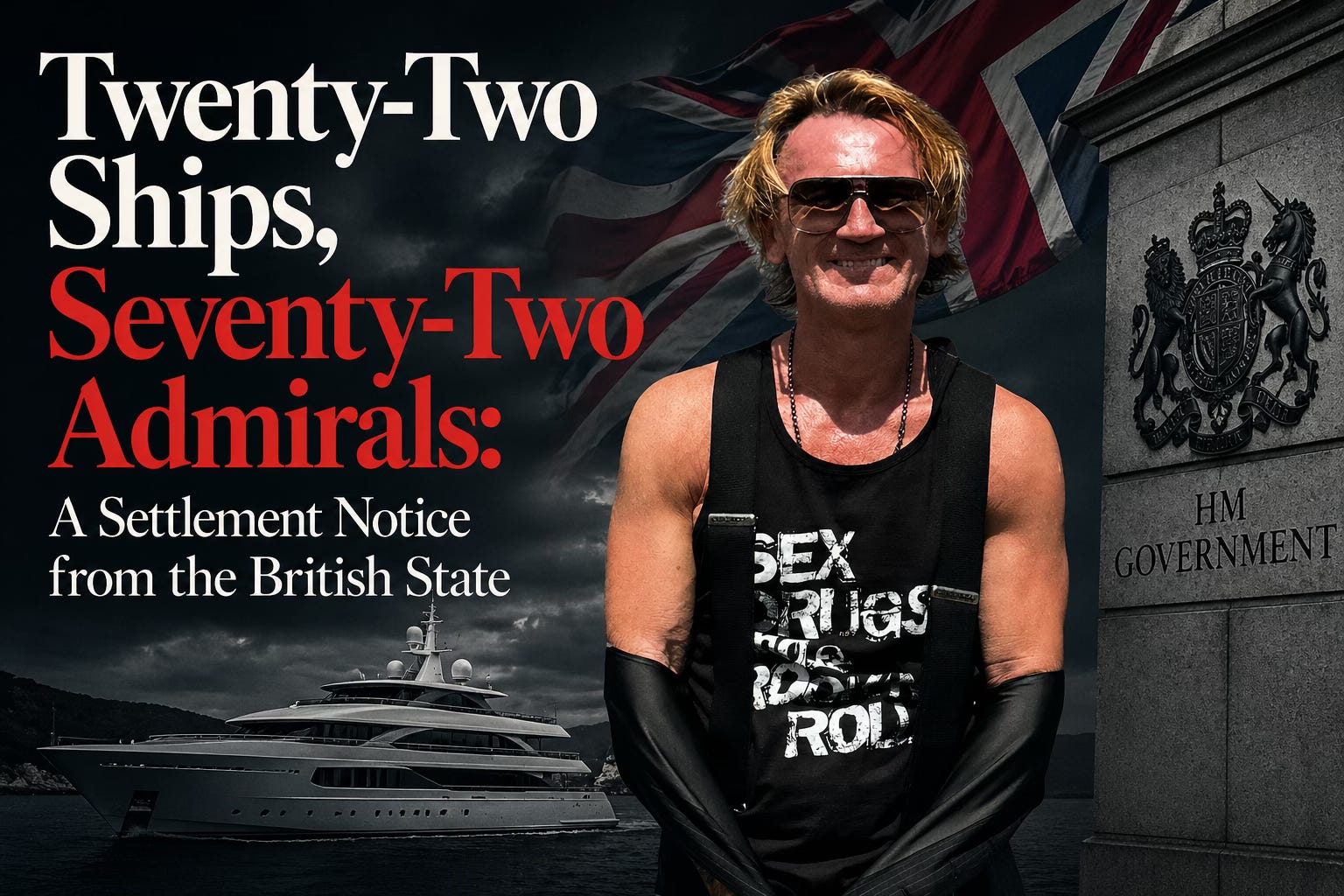
the war office is a hotel.
not a metaphor. a five star check in desk where clerks hand out key cards on the same floors where churchill, first lord of the admiralty, once stood poring over maps, counting ships and bodies and time.
raffles.
mostly foreign capital now, rotating through a structure that no longer has a function beyond memory. next door the british admiralty is being stripped and repurposed for hospitality. portsmouth is selling the citadel. a massive 17th-century fortress whose guns were once trained on the rebellious town’s citizens. these aren’t quirky real estate anecdotes. they’re balance sheet adjustments.
twenty two ships. seventy two admirals. too much command, not enough hull. the nhs carries more administrators than nurses. the army fields fewer deployable tanks than belgium did in 1940.
three ratios. one country. the fractal repeats because the system has outgrown its own purpose and is now eating itself to sustain it.

if you’ve been here since the spice and the ledger, you already know the argument that preceded this one. hamilton over ricardo. tariffs as scaffolding not walls. lincoln and trump reaching for the balance sheet before the cannonball. and if you read the evolutionary paradox, you know the british version of that same disease: finance as the invader, the sovereign as host, the whole postwar settlement as a parasite that mistook its subsidy for its own genius. this paper is the third shot. the one that prices the damage.
i had the arithmetic laid out to me last week without a single person meaning to confess. london was full of defence contractors. the sovereign machine had gathered under lights, selling drones, interceptors, sensors, platforms, command systems, all the kit of a state trying to look permanent while its cost structure turns against it. the language was careful, contained, technical. the math was violent. the cost of running a sovereign now exceeds the cost of operating outside it. that's the inversion. there are cheaper, more viable alternatives.
for a century at least, the large state could justify itself because scale paid. industrial war required bodies, ships, steel, railways, taxes, clerks, factories, command. the sovereign wasn’t elegant, but it was cheaper than the alternative.
cheaper than invasion. cheaper than disorder. cheaper than every town defending itself, every firm negotiating its own security, every family carrying its own catastrophe. the state grew because the external threat made the internal cost tolerable. bureaucracy was the price of survival. taxation was the subscription. citizenship was the billing relationship with hymns attached.
we were promised a new jerusalem.
that equation has flipped. the outside world now offers cheaper ways to live, work, move, store capital, educate children, buy protection, and route around decline. dubai, miami, singapore, st barts, the cloud, mobile capital, private medicine, private schooling, ai administration, jurisdictional arbitrage. not utopias. not even escapes, exactly. just competing products. smaller, faster, less sentimental products aimed directly at the sovereign’s best customers.
while the old state carries fixed costs it can’t cut. pensions. health care. debt service. defence theatre. administrative empires. the democratic promises hardened into liabilities. the tax base is no longer captive, but the obligations are. that’s the inversion. the citizen can leave. the promise can’t.