
𝚝𝚑𝚎 𝚎𝚖𝚋𝚊𝚛𝚛𝚊𝚜𝚜𝚖𝚎𝚗𝚝 𝚘𝚏 𝚝𝚛𝚊𝚗𝚜𝚏𝚘𝚛𝚖𝚊𝚝𝚒𝚘𝚗.
𝚠𝚑𝚊𝚝 𝚒𝚋𝚖'𝚜 𝚜𝚒𝚡𝚝𝚢 𝚋𝚒𝚕𝚕𝚒𝚘𝚗 𝚍𝚘𝚕𝚕𝚊𝚛 𝚖𝚘𝚛𝚗𝚒𝚗𝚐 𝚝𝚊𝚞𝚐𝚑𝚝 𝚖𝚎 𝚊𝚋𝚘𝚞𝚝 𝚖𝚊𝚛𝚔𝚎𝚝𝚜, 𝚒𝚍𝚎𝚗𝚝𝚒𝚝𝚢 𝚊𝚗𝚍 𝚊𝚒

act i. sixty billion dollars before breakfast
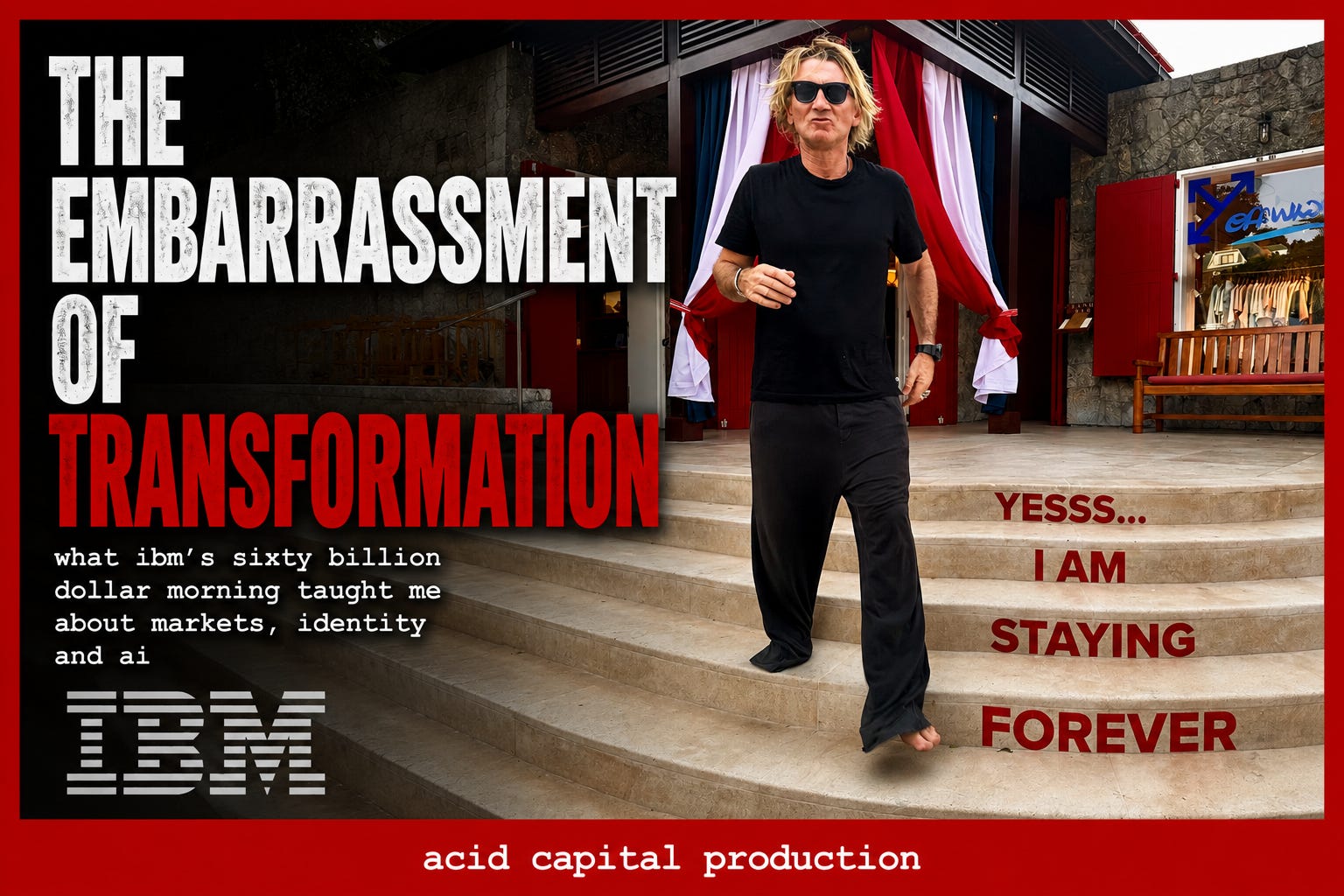
sixty billion dollars of market value disappeared before breakfast and i barely noticed. that isn’t because i thought the market was wrong. it’s because i’ve lived through enough cycles to know that the biggest one day moves rarely happen at the beginning of a story. they happen halfway through, when the old explanation has stopped working but the new one hasn’t yet earned the right to exist. that’s the point where intelligent people become dangerous. they start confusing movement with meaning. they convince themselves that a twenty percent collapse must contain new information when, more often than not, it contains something far less comfortable. uncertainty has finally reached the point where somebody, somewhere, can no longer sit still.
everyone spent the day arguing over software revenues, consulting demand and the pace of ai adoption. fair enough. those things matter. but they aren’t the question that fascinated me as i watched the stock collapse. the real question is much simpler and infinitely more difficult to answer. what exactly is ibm becoming? because companies don’t usually fail in straight lines. they wobble. they stumble. they shed skin while everybody mistakes the discarded skin for the animal itself. halfway through a genuine transformation there is almost no visible difference between reinvention and deterioration. that’s why markets become hysterical. they aren’t reacting to certainty. they’re reacting to the absence of it.